U.S. Media Border Blackout Explained
Foreign Reporters Don't Belong to the Clique
Glenn Spencer, American Border Patrol -- September 12
|
|
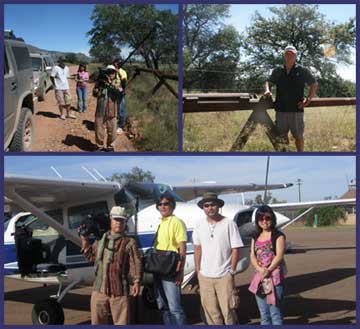
Top: Japanese TV crew interviews Spencer at 'fence' east of Lochiel, Arizona.
Bottom: Before flight along the border (Translator, Yukiko Ide, at right, stayed on the ground). |
For the past two days I worked with a Japanese TV crew to tell the story about the U.S-Mexico border. They were at my ranch Friday when told that I thought the Secure Fence Act of 2006 was a ruse to get the public to buy into another amnesty. When the massive public outcry stopped it, they scuttled the fence idea, I explained.
Saturday morning we flew along the border. They saw how much of what DHS claims to have built is really old 10-ft mat fencing that is easily crossed. They saw how much of the border has no fencing at all. "That is useless," the producer sitting next to me said, pointing to vehicle barriers south of the Krentz ranch.
That afternoon we drove along border toward Lochiel. They were stunned. (This is the section of the border that involved Peggy Davis being called a liar by the head of CBP.) The so-called fence is nothing but low-lying railroad rails.
ABP has been flying the border for years, during which time TV crews have come along – all from Europe or Asia; None from the U.S. For years I thought they just didn't like me, or ABP. Now I realize they just don't like the idea of a fence – a thinking that permeates the entire power-elite, including those who run the media. The Japanese don't belong to the New York-Washington cocktail-clique and don't mind telling the story. |

|
External links may expire at any time.
|

 |
|  |
|  |
|